Craniosacral Therapy: Complete Guide to This Gentle Manual Therapy
In recent years, craniosacral therapy has gained recognition as one of the most effective and gentle manual therapies for treating a wide range of conditions, from chronic pain to stress-related disorders. This therapeutic approach, developed by osteopathic physician Dr. John E. Upledger, works with the body’s natural healing mechanisms to restore balance and promote optimal health.
If you’ve been searching for information about craniosacral therapy treatment, craniosacral manipulation, or sacro cranial therapy, this comprehensive guide will provide you with evidence-based information about this innovative therapeutic technique and how it can benefit your health.
What is Craniosacral Therapy?
Craniosacral therapy (CST) is a gentle, hands-on manual therapy that works with the craniosacral system—a physiological system composed of the membranes and cerebrospinal fluid that surround and protect the brain and spinal cord. This system extends from the bones of the skull, face, and mouth (which make up the cranium) down to the sacrum, the tailbone area.
Using a light touch—generally no more than the weight of a small coin (approximately 5 grams)—craniosacral therapists release restrictions in the craniosacral system to improve the functioning of the central nervous system, dissipate the negative effects of stress, and enhance overall health and resistance to disease.
The Craniosacral System
The craniosacral system consists of:
- Cerebrospinal fluid (CSF): A clear fluid that circulates around the brain and spinal cord, providing protection, nutrients, and waste removal.
- Meningeal membranes: Three layers of protective tissue (dura mater, arachnoid mater, and pia mater) that envelop the central nervous system.
- Cranial bones: The 22 bones of the skull that maintain subtle mobility throughout life.
- Sacrum and coccyx: The bones at the base of the spine that form part of this interconnected system.
- Cerebrospinal fluid production and reabsorption sites: Including the choroid plexuses and arachnoid villi.
History and Development of Craniosacral Therapy
Dr. John E. Upledger and the Upledger Institute
While the concept of cranial osteopathy was first introduced by William Garner Sutherland in the 1930s, it was Dr. John E. Upledger who developed and systematized what we now know as craniosacral therapy in the 1970s and 1980s.
Dr. Upledger, an osteopathic physician and surgeon, made his groundbreaking discovery during a spinal surgery in 1970. While assisting in the removal of a plaque from the dura mater (the outer membrane of the spinal cord), he observed a rhythmic movement that he couldn’t explain at the time. This observation sparked decades of research that would revolutionize manual therapy.
From 1975 to 1983, Dr. Upledger led a team of anatomists, physiologists, biophysicists, and bioengineers at Michigan State University to study the craniosacral system. Their research confirmed the existence of the craniosacral rhythm and established the scientific foundation for craniosacral therapy.
In 1985, Dr. Upledger founded the Upledger Institute, which has since become the world’s leading authority in craniosacral therapy education and research. The Institute has trained over 100,000 healthcare professionals worldwide in CST techniques.
Scientific Foundations of Craniosacral Therapy
The Craniosacral Rhythm
One of the fundamental concepts in craniosacral therapy is the craniosacral rhythm—a subtle, rhythmic movement of the craniosacral system that occurs independently of breathing and heart rate. This rhythm, which cycles approximately 6-12 times per minute, can be palpated by trained practitioners throughout the body.
The craniosacral rhythm is thought to be generated by:
- The production and reabsorption of cerebrospinal fluid
- The inherent motility of the brain and spinal cord
- The mobility of the cranial bones and sacrum
- The involuntary motion of the meningeal membranes
How Does Craniosacral Therapy Work?
Craniosacral therapy works on multiple physiological levels:
- Mechanical level: Releases restrictions in the cranial bones, membranes, and connective tissues that may impede proper craniosacral system function.
- Fluid dynamics: Improves the production, circulation, and reabsorption of cerebrospinal fluid, enhancing brain and spinal cord nourishment.
- Nervous system regulation: Influences the autonomic nervous system, promoting a shift from sympathetic (fight-or-flight) to parasympathetic (rest-and-digest) dominance.
- Fascial connections: Works with the fascial network that connects all body structures, allowing releases to occur throughout the entire system.
- Energetic level: Addresses areas where the body has retained physical or emotional trauma in the form of “energy cysts.”
Craniosacral Therapy vs. Craniosacral Manipulation: Understanding the Difference
Many people search for information about both craniosacral therapy and craniosacral manipulation. While these terms are sometimes used interchangeably, there are important distinctions:
Craniosacral Therapy (CST)
- Approach: Gentle, non-invasive, following the body’s inherent wisdom
- Pressure: Extremely light (approximately 5 grams or less)
- Philosophy: Facilitating the body’s self-correction mechanisms
- Technique: Listening to tissue responses and following their direction
- Origin: Upledger Institute methodology
- Safety: Very safe with minimal contraindications
Craniosacral Manipulation
- Approach: More direct, practitioner-directed techniques
- Pressure: Variable, sometimes using more force
- Philosophy: Correcting specific structural problems
- Technique: Direct manipulation of cranial bones and sutures
- Origin: Classical cranial osteopathy tradition
- Safety: Requires more specialized training and careful patient selection
At Osteofuengirola, we primarily use the gentle craniosacral therapy approach as taught by the Upledger Institute, which has proven to be safe and effective for patients of all ages, from newborns to the elderly.
Craniosacral Therapy Techniques
Craniosacral therapists use a variety of specific techniques, all characterized by gentle touch and careful listening to the body’s responses:
Core Techniques
- Still Point Induction: A technique that encourages the craniosacral system to pause momentarily, allowing for deep relaxation and system reset.
- Dural Tube Release: Addressing restrictions along the spinal dura mater from the occiput to the sacrum.
- Diaphragm Releases: Working with the body’s major fascial diaphragms (pelvic, respiratory, thoracic inlet, and hyoid).
- Cranial Base Release: Releasing restrictions at the junction between the skull and the spine.
- Temporal Bone Work: Addressing the temporal bones, which house the inner ear and affect numerous body functions.
- Sphenoid-Occiput Decompression: Working with these central cranial bones to optimize pituitary function and craniosacral rhythm.
- Frontal and Parietal Lifts: Gentle techniques to release restrictions in these cranial bones.
- Sacral Decompression: Releasing restrictions at the base of the spine.
Advanced Techniques
- SomatoEmotional Release (SER): A therapeutic process that helps release emotional trauma stored in body tissues.
- Direction of Energy Technique: Working with areas where the body has isolated traumatic energy.
- Arcing: Releasing restrictions between two distant points in the body.
- Lymphatic Pump Techniques: Stimulating lymphatic drainage to enhance immune function.
Benefits and Clinical Applications of Craniosacral Therapy
Craniosacral therapy treatment has been shown to be effective for a remarkably wide range of conditions. Research and clinical experience support its use in the following areas:
Pain Management
- Chronic pain syndromes: Including fibromyalgia and complex regional pain syndrome
- Migraines and headaches: Both tension-type and vascular headaches
- Neck and back pain: Chronic cervical, thoracic, and lumbar pain
- TMJ disorders: Temporomandibular joint dysfunction and related facial pain
- Post-surgical pain: Especially after spinal or cranial surgeries
Neurological Conditions
- Post-concussion syndrome: Helping recover from traumatic brain injuries
- Vertigo and dizziness: Related to inner ear or central nervous system issues
- Tinnitus: Ringing or buzzing in the ears
- Seizure disorders: As a complementary approach
- Multiple sclerosis: Managing symptoms and improving quality of life
- Cerebral palsy: Improving function and reducing spasticity
Stress-Related Disorders
- Anxiety and depression: Supporting mental health through nervous system regulation
- Post-Traumatic Stress Disorder (PTSD): Processing and releasing traumatic memories
- Insomnia and sleep disorders: Improving sleep quality and duration
- Chronic fatigue syndrome: Restoring energy and vitality
- Burnout: Recovery from physical and emotional exhaustion
Pediatric Conditions
- Birth trauma: Addressing the effects of difficult births or cesarean sections
- Colic and reflux: Soothing digestive distress in infants
- Plagiocephaly: Treating flat head syndrome
- Breastfeeding difficulties: Improving latch and sucking patterns
- Sleep problems: Helping babies and children sleep better
- Developmental delays: Supporting optimal neurological development
- Autism spectrum disorders: Improving sensory integration and social engagement
- ADHD: Supporting focus and self-regulation
Women’s Health
- Fertility support: Optimizing pelvic function and reducing stress
- Pregnancy discomfort: Relieving back pain, sciatica, and other pregnancy-related issues
- Birth preparation: Optimizing pelvic alignment for labor
- Postpartum recovery: Addressing physical and emotional challenges after birth
- Menstrual disorders: Balancing hormonal and structural factors
Other Conditions
- Immune system disorders: Supporting optimal immune function
- Sinus problems: Chronic sinusitis and congestion
- Visual disturbances: Related to cranial restrictions
- Learning disabilities: Supporting cognitive function
- Chronic fatigue: Restoring energy balance
What to Expect in a Craniosacral Therapy Session
Understanding what happens during a craniosacral therapy treatment can help you feel more comfortable and get the most benefit from your sessions.
Initial Consultation
Your first session at Osteofuengirola will typically include:
- Health history review: Discussion of your current symptoms, medical history, and treatment goals
- Physical assessment: Evaluation of your posture, movement patterns, and craniosacral rhythm
- Treatment plan: Personalized recommendations based on your specific needs
- Treatment session: Your first craniosacral therapy treatment
During the Session
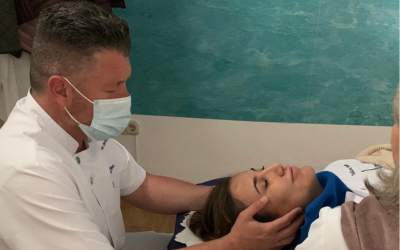
- Positioning: You’ll lie fully clothed on a comfortable treatment table
- Gentle touch: The therapist will use very light touch (about 5 grams of pressure) at various points on your body
- Duration: Sessions typically last 45-60 minutes
- Sensations: You may feel warmth, tingling, pulsing, or deep relaxation. Some people fall asleep, which is perfectly fine
- Emotional releases: Occasionally, stored emotions may surface. This is a normal and beneficial part of the healing process
After the Session
- Immediate effects: Most people feel deeply relaxed, though some may feel energized
- Processing period: Your body may continue to process the treatment for 24-48 hours
- Hydration: Drinking plenty of water helps facilitate the healing process
- Rest: Allow time for rest and integration after your session
- Follow-up: Frequency of sessions depends on your condition and response to treatment
Scientific Evidence and Research
While more research is always needed, a growing body of scientific evidence supports the efficacy of craniosacral therapy:
Published Studies
- Chronic neck pain: A randomized controlled trial published in The Clinical Journal of Pain (2016) found that craniosacral therapy significantly reduced chronic neck pain compared to sham treatment.
- Migraine: Multiple studies have shown that CST can reduce migraine frequency and intensity.
- Fibromyalgia: Research indicates improvements in pain, fatigue, and quality of life with craniosacral therapy.
- Infant colic: Studies have demonstrated significant reduction in crying time in colicky infants treated with craniosacral therapy.
- Autonomic nervous system: Research has shown that CST can influence heart rate variability, indicating improved autonomic balance.
Mechanisms of Action
Research suggests that craniosacral therapy works through several mechanisms:
- Fascia release: Releasing restrictions in the fascial network that connects all body structures
- Parasympathetic activation: Stimulating the “rest and digest” branch of the nervous system
- Pain gate control: Modulating pain signals in the central nervous system
- Neuroplasticity: Supporting the brain’s ability to reorganize and heal
- Lymphatic drainage: Improving waste removal and immune function
For more information on the research supporting craniosacral therapy, visit the Upledger Institute website, which maintains an updated database of scientific studies.
Comparison with Other Manual Therapies
How does sacro cranial therapy compare to other manual therapies? Understanding these differences can help you choose the right treatment:
Craniosacral Therapy vs. Massage Therapy
- Pressure: CST uses much lighter touch (5g vs. several pounds in massage)
- Focus: CST works specifically with the craniosacral system, while massage focuses on muscles
- Approach: CST follows the body’s innate healing intelligence rather than applying force
- Effects: CST works more at the level of the nervous system and fascia
Craniosacral Therapy vs. Chiropractic
- Technique: CST uses gentle holds; chiropractic uses adjustments with thrust
- Focus: CST works with the entire craniosacral system; chiropractic focuses primarily on spinal alignment
- Philosophy: Both respect the body’s self-healing abilities but approach it differently
- Gentleness: CST is gentler and safer for fragile conditions
Craniosacral Therapy vs. Osteopathy
- Relationship: CST emerged from osteopathy and shares its holistic philosophy
- Scope: Osteopathy uses a broader range of techniques; CST specializes in craniosacral work
- Pressure: CST typically uses lighter pressure than many osteopathic techniques
- Complementarity: These approaches work excellently together, which is why we offer both at Osteofuengirola
Safety, Contraindications, and Side Effects
Safety Profile
Craniosacral therapy is one of the safest manual therapies available. Because of its gentle nature, it can be used with:
- Newborn infants
- Elderly patients
- Pregnant women
- People with fragile conditions
- Post-surgical patients (with medical clearance)
Contraindications
While very safe, craniosacral therapy treatment should be avoided or modified in certain situations:
- Acute intracranial hemorrhage or aneurysm: Wait until medically stabilized
- Recent skull fracture: Wait for proper healing
- Herniation of the medulla oblongata: Avoid cranial work
- Acute stroke: Wait until stabilized before beginning treatment
- Conditions where intracranial pressure changes are contraindicated
Always inform your therapist of any serious medical conditions so appropriate modifications can be made.
Possible Side Effects
Most people experience only positive effects from craniosacral therapy. Occasionally, mild temporary effects may occur:
- Fatigue: Deep relaxation may lead to sleepiness
- Mild headache: As restrictions release, brief discomfort may occur
- Emotional release: Stored emotions may surface (this is therapeutic)
- Increased urination: As the body releases toxins
- Muscle soreness: Mild and temporary as the body adjusts
These effects typically resolve within 24-48 hours and indicate that the body is processing the treatment.
Salvador Portillo’s Training with the Upledger Institute
At Osteofuengirola, we are committed to providing the highest quality craniosacral therapy based on the most current research and training. Salvador Portillo has completed extensive training through the Upledger Institute, the world’s leading authority in craniosacral therapy education.
Salvador’s Credentials Include:
- Craniosacral Therapy I & II: Foundation and intermediate training
- Advanced Craniosacral Therapy: Specialized techniques for complex cases
- SomatoEmotional Release I & II: Advanced training with Dr. Chas Perry in processing emotional trauma
- Pediatric Craniosacral Therapy: Specialized training for working with babies and children
- Continuing education: Regular updates and advanced workshops
The Upledger Institute Difference
Training through the Upledger Institute ensures:
- Evidence-based practice: Techniques supported by research and clinical experience
- Standardized protocols: Consistent, reliable treatment approaches
- Safety: Comprehensive training in contraindications and modifications
- Ethics: High standards of professional conduct
- Continuing education: Access to the latest developments in the field
Frequently Asked Questions About Craniosacral Therapy
How is craniosacral therapy different from cranial osteopathy?
While both emerged from the same roots, craniosacral therapy as developed by Dr. Upledger uses a gentler approach and is accessible to a wider range of healthcare professionals. Cranial osteopathy is practiced specifically by osteopaths and may include more varied techniques.
Can craniosacral therapy help with anxiety and depression?
Yes. By regulating the autonomic nervous system and releasing stored trauma, craniosacral therapy can significantly reduce anxiety and support recovery from depression. Many patients report improved mood, better sleep, and reduced stress after regular sessions.
Is craniosacral therapy scientifically proven?
While more research is always beneficial, there is a growing body of peer-reviewed scientific evidence supporting the efficacy of craniosacral therapy, particularly for pain management, migraine treatment, and stress-related conditions. The Upledger Institute maintains an updated database of research studies.
How many sessions will I need?
This varies greatly depending on your condition and how long you’ve had it. Acute problems may improve in 2-4 sessions, while chronic conditions often benefit from 6-10 sessions or more. Some people choose to continue with monthly maintenance sessions. Salvador will discuss a treatment plan after your initial evaluation.
Can craniosacral therapy help my baby?
Yes! Craniosacral therapy is exceptionally gentle and safe for infants. It can help with colic, feeding difficulties, sleep problems, and the effects of birth trauma. Many parents notice immediate improvements in their baby’s comfort and behavior.
What should I wear to a session?
Wear comfortable, loose-fitting clothing. You remain fully clothed during the session. Avoid wearing jewelry, especially around the neck and head.
Will I feel anything during the session?
Experiences vary. Most people feel deep relaxation. Some notice warmth, tingling, or subtle pulsing sensations. Others may have emotional releases or memories surface. Some people fall asleep, which is perfectly fine and doesn’t reduce the treatment’s effectiveness.
Can I receive craniosacral therapy if I’m pregnant?
Absolutely! Craniosacral therapy is safe and beneficial throughout pregnancy. It can help with common pregnancy discomforts, prepare the body for labor, and support optimal fetal positioning.
Is craniosacral therapy covered by insurance?
Coverage varies by insurance provider and policy. Some plans cover craniosacral therapy when provided by licensed healthcare professionals like physiotherapists or osteopaths. Contact your insurance company to verify your coverage.
How soon will I feel results?
Many people notice improvements immediately—such as reduced pain, better sleep, or decreased anxiety. For chronic conditions, progressive improvement typically occurs over several sessions as the body’s self-healing mechanisms are activated.
Book Your Craniosacral Therapy Session at Osteofuengirola
If you’re interested in experiencing the profound benefits of craniosacral therapy treatment, we invite you to visit Osteofuengirola in Fuengirola. Salvador Portillo’s extensive training with the Upledger Institute ensures you receive the highest quality care in a professional, compassionate environment.
Contact Information
- Phone: 687 74 98 25 (Salvador Portillo)
- Email: info@osteofuengirola.pro
- Address: C/ Troncon N-44, 29640 Fuengirola (Málaga)
- Hours: Monday to Saturday, 09:00 to 21:00
- Multilingual service: Spanish, English, Russian, and Bulgarian
Schedule your initial consultation today and discover how this gentle yet powerful therapy can help restore your health, reduce pain, and enhance your overall well-being.
Conclusion
Craniosacral therapy represents a paradigm shift in how we approach health and healing. Rather than forcing change upon the body, this gentle therapy works with the body’s innate wisdom to facilitate self-correction and optimal function. Whether you’re dealing with chronic pain, recovering from trauma, seeking support during pregnancy, or simply wanting to optimize your health, craniosacral therapy offers a safe, effective, and profoundly relaxing path to wellness.
At Osteofuengirola, we combine the gold-standard training of the Upledger Institute with over 15 years of clinical experience to provide you with exceptional care. Our commitment to continuous learning and evidence-based practice ensures you receive treatments that are both scientifically sound and therapeutically effective.
Your body has an incredible capacity to heal itself. Craniosacral therapy simply removes the obstacles that prevent this natural healing from occurring. Let us help you unlock your body’s potential for health and vitality.
Contact Osteofuengirola today and take the first step on your journey to optimal health through craniosacral therapy.
This post is also available in: Spanish